Commercial waste compactors reduce waste volume and collection frequency, helping businesses save space and hauling costs by matching the right compactor to their waste type, volume, available space and operational needs.
When it comes to business waste management, commercial waste compactors play a crucial role in improving efficiency and streamlining operations. Available in a variety of types, these compactors cater to the specific needs of different industries. Whether you manage a restaurant or oversee a logistics warehouse, selecting the right compactor can simplify waste disposal and help you address operational challenges more effectively.
Now, let’s take a closer look at the most common types of commercial waste compactors:
1) Self-Contained Waste Compactors
Self-contained waste compactors are designed with the compactor unit and waste bin integrated into one system. Both the bin and compactor are taken off-site for disposal, and the system is built to be liquid resistant.
With self-contained compactors, you will find that small items or liquids will not spill or fall out, as everything stays secure and contained. They are also extremely versatile and ideal for general waste in a variety of industries.
Best for: Restaurants, malls, entertainment complexes, hospitals, and transportation hubs—industries that generate wet or mixed waste and require a secure, leak-proof solution.
2) Stationary Compactors
Stationary waste compactors feature a separate bin and compactor, with the compactor remaining in place while the waste bin is removed for disposal. These compactors are capable of handling larger volumes of waste and providing higher compaction ratios, particularly for cardboard waste.
Best for: Warehouses, logistics centers, manufacturing facilities, and distribution centers—businesses that generate large amounts of dry waste and require a permanent compaction solution.
3) Auger Compactors
Auger compactors offer higher compaction with a smaller opening and utilize a screw-like mechanism (the auger) to push waste into a tightly packed space. With this design, it allows for denser compaction and packing, allowing businesses to manage their waste more effectively. Additionally, the smaller opening controls waste flow and is ideal for certain materials like organic waste.
Best for: Food manufacturers, grocery stores, logistics centers, and industrial settings—businesses looking for maximum compaction and controlled waste flow.
4) Front-End Vertical Compactor
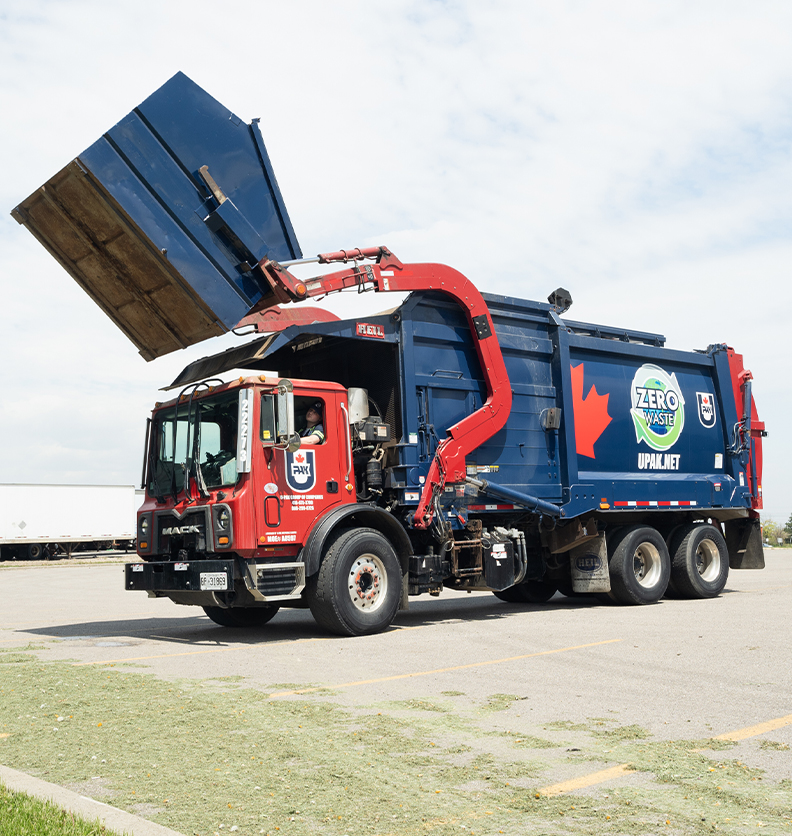
These waste compactors have a smaller footprint and are serviced by front-end trucks, with the bin being serviced directly on-site. Front-end vertical compactors are designed to save space, making it ideal for areas with limited room. They are also convenient, being easy to place near entry points for quick servicing.
Best for: Restaurants, malls, plazas, and retail stores—businesses with space constraints that need an efficient, small-footprint waste solution.
5) Baler
Balers are waste compactors specifically designed to handle recyclables like cardboard, creating tightly packed bales of material. They are space-efficient and easy to use.
Best for: Grocery stores, warehouses, logistics centers, and businesses that generate large amounts of recyclable materials such as cardboard and plastic.
Waste Compactor Comparison Table
| Compactor Type | Waste Type | Space Requirement | Ideal For | Key Benefits |
| Self-Contained Compactors | Wet/mixed waste | Moderate | Restaurants, malls, hospitals, transportation hubs | Leak-proof, easy disposal, clean operation |
| Stationary Compactors | Dry waste (cardboard, general waste) | Larger footprint | Warehouses, logistics, manufacturing, distribution centers | High compaction, cost-effective for bulk waste |
| Auger Compactors | High-density waste, food waste | Moderate | Food manufacturers, grocery stores, logistics, industrial use | Maximizes compaction, reduces waste volume significantly |
| Front-End Vertical Compactors | General waste | Small footprint | Restaurants, malls, plazas, retail stores | Space-saving, easy placement near entry points |
| Balers | Recyclables (cardboard, plastic) | Small footprint | Grocery stores, warehouses, logistics centers | Efficient recycling, reduces waste hauling costs |

Choosing the right commercial compactor depends on the nature of your business, the volume of waste you generate, and the type of waste you produce.
By understanding the advantages and specific applications of each compactor type, you can make an informed decision that will improve your waste management strategy and help you keep your business clean, efficient, and environmentally responsible.
Contact U-Pak today to discover which commercial waste compactor suits your business best.
Frequently Asked Questions
What is a commercial waste compactor?
A commercial waste compactor is a machine that compresses waste materials into a smaller volume, reducing the storage space required and lowering the frequency of waste collection pickups. Businesses use compactors to improve operational efficiency, reduce waste disposal costs and maintain cleaner facilities.
What are the different types of commercial waste compactors?
The most common types of commercial waste compactors include self-contained, stationary, auger, front-end vertical and baler compactors. Each type is designed for specific waste streams, facility layouts and operational requirements.
How do I choose the right commercial waste compactor for my business?
Choosing the right waste compactor depends on several factors, including the type of waste generated, waste volume, available space, collection frequency and sustainability goals. Businesses should evaluate whether they handle wet waste, dry waste, recyclables or high-volume materials before selecting a compaction system.
Which businesses benefit most from commercial waste compactors?
Commercial waste compactors are commonly used by warehouses, distribution centres, manufacturing facilities, restaurants, retail stores, grocery stores, hospitals, shopping centres and food processing operations. Any business generating significant amounts of waste can benefit from compaction equipment.
How much space does a commercial waste compactor require?
Space requirements vary by compactor type. Front-end vertical compactors and balers typically have smaller footprints, while stationary compactors generally require more space due to their larger containers and loading areas.