About
R100 Renewable Diesel
Powering a Cleaner Future
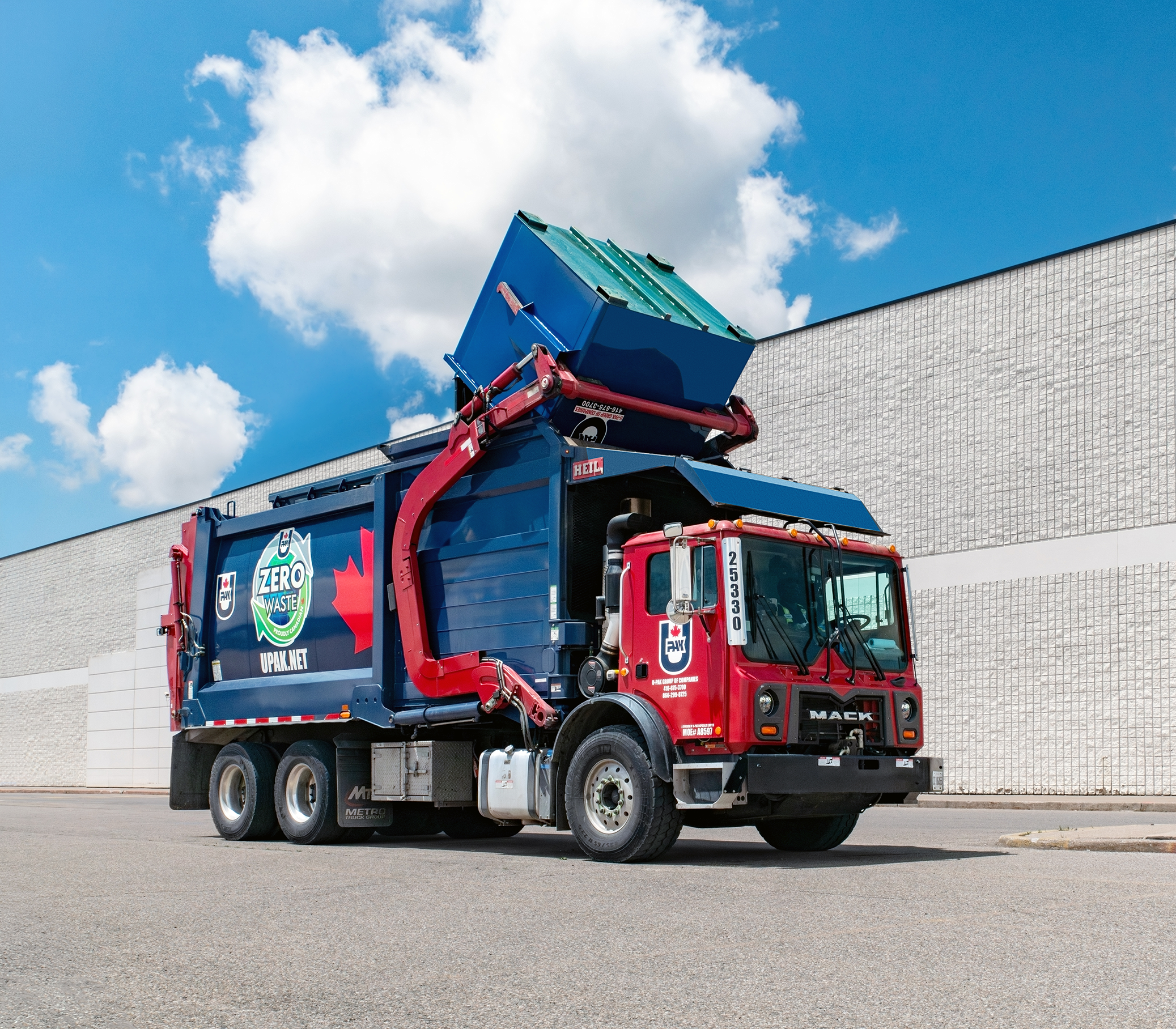
U-Pak is introducing R100 renewable diesel across our fleet as part of our commitment to more sustainable waste management. In partnership with McDougall Energy, we’re reducing the carbon impact of our fleet while continuing to deliver reliable waste collection, recycling, and Zero Waste Solutions across the GTA. By switching to renewable diesel, U-Pak can take practical steps toward lower-carbon fleet operations.
Why U-Pak is Adopting R100 Renewable Diesel
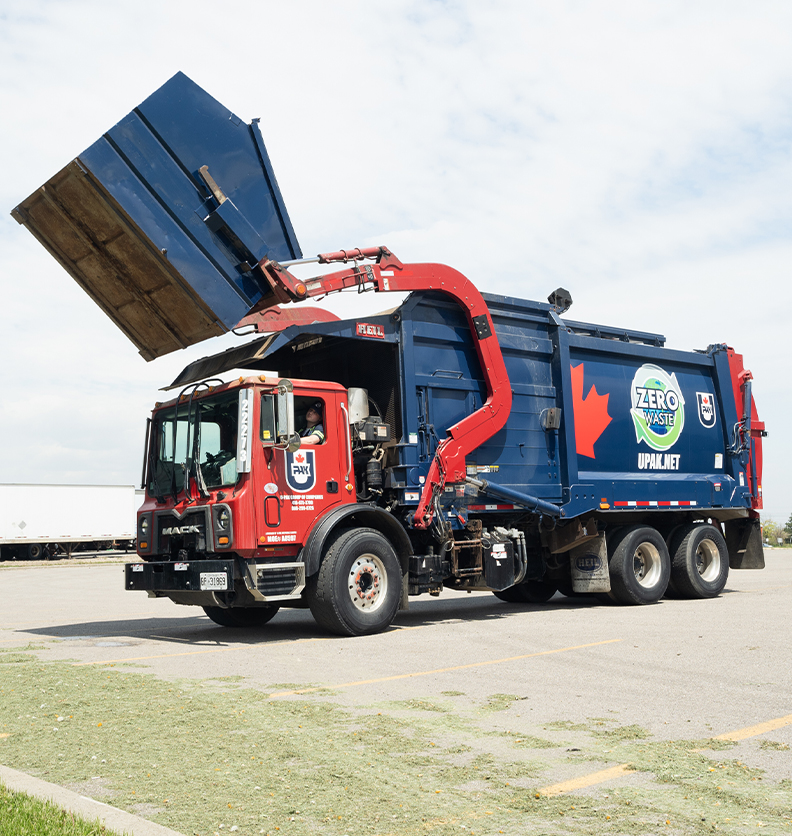
Waste collection vehicles operate long hours, travel demanding routes and make frequent stops. They also complete regular lifting and collection cycles. As a result, these vehicles need a fuel that supports dependable performance.
By switching to R100 renewable diesel, U-Pak can reduce lifecycle greenhouse gas emissions without giving up the performance and reliability our customers expect.
Benefits of R100 Renewable Diesel

Lower Lifecycle Emissions
R100 helps to lower the carbon intensity of fleet operations while maintaining dependable service
Cleaner Combustion
R100 supports more efficient fuel combustion and may help reduce certain tailpipe emissions
Cleaner Engine Performance
R100 can produce less soot and fewer deposits, helping support engine efficiency and reduce maintenance
Proven Reliability
R100 provides the performance required for demanding commercial fleet operations with no compromise on service
A Practical Solution
R100 is designed to work with compatible vehicles and existing infrastructure. Because of this, U-Pak can reduce emissions today while continuing to support future sustainability initiatives

R100 and U-Pak’s Sustainability Strategy
The transition to R100 renewable diesel is part of U-Pak’s broader approach to sustainable waste management. Along with renewable fuel, our sustainability initiatives include:
- Energy from Waste
- Recycling, bakery, and organics diversion
- Equipment right-sizing
- Waste audits and diversion reporting
- Remote compactor monitoring
Together, these initiatives help U-Pak reduce emissions, improve collection efficiency, and offer customers more sustainable waste management options. In turn, these efforts support our ongoing work to reduce waste and improve how resources are managed.
Leading the Transition to Cleaner Waste Collection
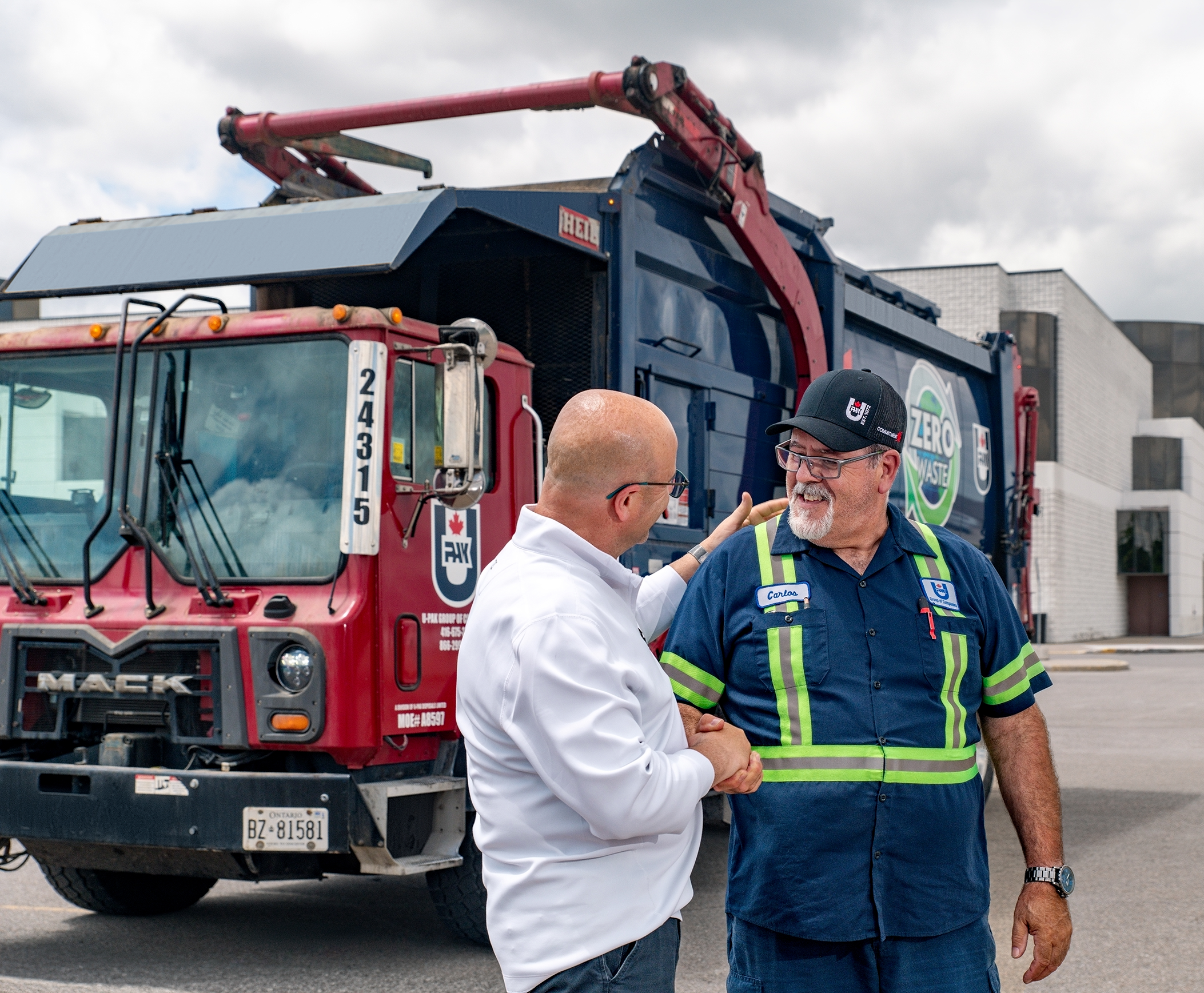
At U-Pak, we believe sustainability means taking practical action today. For this reason, we are introducing R100 renewable diesel across our fleet to help reduce the environmental impact of waste collection. Moreover, our use of R100 demonstrates how established commercial fleet operations can move toward cleaner fuel alternatives. This renewable fuel provides a lower-carbon option while allowing us to maintain the equipment, experienced drivers, and dependable service our customers have come to expect. Ultimately, R100 is one more way U-Pak can combine reliable waste collection with practical sustainability solutions.
Moving Forward with R100
R100 renewable diesel marks an important step in U-Pak’s ongoing sustainability journey. As we expand the use of R100 across our fleet, we will continue to invest in innovative technologies, responsible waste processing and operational improvements. In addition, these efforts will help support a cleaner, more circular future for commercial waste management. R100 renewable diesel. Lower lifecycle emissions. Reliable U-Pak service.
Frequently Asked Questions
What is R100 renewable diesel?
R100 renewable diesel is a renewable fuel made from renewable waste feedstocks. It is a drop-in alternative to conventional diesel. This means it can be used in compatible existing diesel engines and fuel infrastructure without requiring modifications. As a result, renewable diesel can provide a practical option for businesses looking to reduce the carbon impact of fleet operations.
Can R100 be used in existing diesel vehicles?
Yes. R100 is a drop-in renewable fuel that is compatible with most diesel engines. It can be used on its own or blended with conventional diesel, depending on vehicle and fuel requirements.
Therefore, switching to renewable diesel can be a simple and practical step for compatible commercial vehicles.
How does R100 help reduce emissions?
R100 can significantly lower lifecycle greenhouse gas emissions, as well as reduce nitrogen oxides (NOx) and particulate matter (PM) than conventional diesel, since it burns cleaner. Moreover, renewable diesel can help reduce the overall carbon impact of fleet operations.
By switching our fleet to R100, U-Pak can reduce carbon emissions by up to 90%, based on the fuel and lifecycle emissions methodology used. As a result, Renewable Diesel provides U-Pak with a practical way to support lower-carbon waste collection.
Does renewable diesel improve engine performance?
R100 has a high cetane number, which supports faster ignition and more complete combustion. In turn, this can help reduce soot buildup and support diesel particulate filter (DPF) performance.
R100 also helps to lower diesel exhaust fluid (DEF) consumption and engine noise, depending on vehicle and operating conditions. Overall, these benefits can support reliable performance when using this renewable diesel fuel in compatible vehicles.
Why has U-Pak chosen to use R100?
At U-Pak, sustainability is a core part of our Zero Waste Solutions. For that reason, we are using R100 renewable diesel to reduce the environmental impact of our fleet while maintaining the reliable performance our customers expect.
At the same time, renewable diesel supports our broader sustainability goals, which includes Energy from Waste, recycling, organics diversion, equipment right sizing, waste audits, and remote monitoring.
By combining these solutions, U-Pak can continue to improve waste management across the Greater Toronto Area, while taking practical steps toward a lower-carbon future.