U-Pak University
Emerald
Energy From Waste
What is Energy from Waste?
ENERGY FROM WASTE (EFW) is the scientifically engineered process that converts non-recyclable waste into useful energy, such as electricity and steam.
It offers a responsible alternative for materials that cannot be:
-
- Reused
- Recycled
- Composted, or otherwise diverted
Instead of sending these residual materials to landfill, Energy from Waste facilities use them as a resource to generate energy.
For businesses, this means that residual waste can still have a useful purpose—even after all practical recycling and diversion opportunities have been explored.

Why Does Energy from Waste Matter?
The goal of sustainable waste management isn’t simply to recycle more. It’s about finding the best possible destination for every type of material.
Even with effective reduction, reuse, recycling and composting programs, some residual waste remains. This is where Energy from Waste can play an important role.
Energy from Waste helps:
-
- Reduce landfill dependence
- Conserve landfill capacity
- Recover energy from residual waste
How U-Pak Uses Energy from Waste
At U-Pak, our Zero Waste Solutions help businesses identify opportunities to improve waste diversion across their operations. When suitable residual waste remains after other diversion opportunities have been explored, U-Pak can direct those materials to Emerald Energy from Waste.
At the facility, non-recyclable waste is converted into electricity and steam under stringent environmental standards. Combined with strong recycling and organics programs, Energy
from Waste helps businesses reduce their dependence on landfills and move closer to zero waste.

How Emerald Converts Waste into Energy
What happens to waste after it leaves a facility?
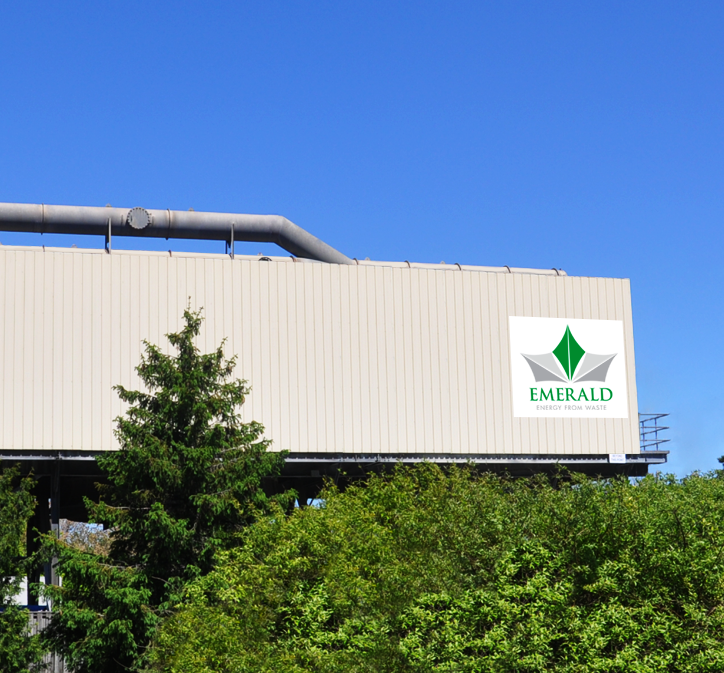
At Emerald Energy from Waste, non-hazardous residual waste goes through a carefully controlled process that transforms it into useful energy.
Operating in Brampton, Ontario since 1992, Emerald processes non-hazardous solid waste from municipal, industrial, commercial and institutional sources. The facility is authorized to process up to 500 metric tonnes of waste per day, recovering energy from materials that would otherwise be sent to landfill.
The result? Enough electricity is generated to continuously power approximately 6,000 homes, along with recovered steam supplied to a nearby recycled-paper manufacturer.
Here’s how the process works.
STEP 1
Waste Delivery and Screening
Waste is delivered to an enclosed tipping floor, where trained operators visually inspect incoming loads. Oversized, prohibited or non-compliant materials are identified and removed before processing.
Emerald’s tipping floor can hold approximately 2,250 tonnes, which is roughly four to five days’ worth of operating feedstock. Only approved, non-hazardous solid waste continues through the system.
WHY IT MATTERS: Screening protects employees and equipment and ensures that only suitable materials enter the Energy from Waste process.


STEP 2
Gasification and Combustion
Approved waste is fed into one of Emerald’s five two-chamber Consumat gasifiers.
Lower chamber: Gasification
Waste is heated in a low-oxygen environment at approximately 750°C to 850°C for about six hours. Rather than immediately burning, the material breaks down and produces an energy-rich synthetic gas known as syngas.
Upper chamber: Combustion
The syngas enters an oxygen-rich upper chamber, where it is fully combusted at temperatures of approximately 1,000°C to 1,100°C.
This high-temperature, dual-stage process provides controlled thermal breakdown and generates the heat required for energy recovery.
WHY IT MATTERS: The two-stage process helps maximize energy recovery while maintaining the temperatures and residence times required by environmental standards.
STEP 3
Heat Recovery and Steam Production
Hot flue gases from combustion pass through a water-tube boiler. Heat from the gases is transferred to water circulating through the boiler tubes, producing high-pressure steam.
At Emerald:
-
- Flue gas enters the boiler at approximately 1,000°C
- Gas temperature is reduced to approximately 230°C
- Steam is produced at approximately 343°C
- The system can generate approximately 12,250 kilograms of steam per hour
This steam becomes a valuable source of recovered energy instead of allowing the heat to go unused.


STEP 4
Electricity Generation
High-pressure steam drives a turbine generator, converting thermal energy into electricity. Emerald currently produces approximately 10 MW, which powers the facility and contributes electricity to Ontario’s grid.
Emerald also supplies recovered steam to a nearby recycled-paper manufacturer, helping reduce the facility’s reliance on fossil-fuel boilers.
WHY IT MATTERS: One waste stream can generate multiple forms of useful energy while reducing the amount of material sent to landfill.
How Are Air Emissions Managed?
Energy recovery is only one part of the process. Flue gases pass through a multi-stage Air Pollution Control system before release.
Emerald’s system includes:
- Evaporative cooling to control gas temperature
- Venturi reactors that introduce lime and activated carbon
- Baghouse filters that capture particulate matter
- Induced-draft fans that maintain controlled airflow
- Selective Catalytic Reduction to reduce nitrogen oxides
Together, these systems are designed to remove or reduce:
- Acid gases
- Particulate matter
- Mercury and other heavy metals
- Dioxins and furans
- Nitrogen oxides
During Selective Catalytic Reduction, ammonia is injected as flue gas passes through catalyst beds. This process converts nitrogen oxides into nitrogen and water.
Continuous Monitoring
Emerald continuously monitors key operating and emissions indicators, including:
- Carbon monoxide and oxygen
- Hydrogen chloride
- Opacity
- Nitrogen oxides
Independent stack testing also assesses additional substances and verifies compliance with Ontario’s environmental requirements.
KEY TAKEAWAY: Modern Energy from Waste depends on controlled combustion, advanced air-pollution controls, continuous monitoring and


The Benefits of Energy from Waste

Reduces Landfill Dependence
EfW can reduce the volume of residual waste requiring landfill disposal by 85% to 90%, helping conserve Ontario’s limited landfill capacity.
Recovers Value from Residual Waste
Materials that cannot be reused or recycled can still provide value by producing electricity and steam.
Reduces Landfill Methane
When organic material decomposes in a landfill without oxygen, it produces methane, a powerful greenhouse gas. Diverting suitable residual waste from landfill disposal can help avoid these emissions.
Produces Local Energy
Emerald generates electricity for its operations and Ontario’s grid and supplies steam to a neighbouring recycled-paper manufacturer.
Supports a Circular Economy
Energy from Waste treats residual waste as a resource rather than simply burying it. It complements reduction, reuse, recycling and composting by recovering value from what remains.
Supports More Resilient Waste Management
Local Energy from Waste capacity can reduce reliance on distant landfills and cross-border waste exports while helping municipalities and businesses secure long-term residual-waste solutions.
Emerald Energy from Waste
Emerald is Ontario’s longest-running Energy from Waste facility and has operated in Brampton for more than 30 years. The facility:
-
- Processes approximately 500 tonnes of non-hazardous waste per day
- Generates approximately 10 MW of energy
- Produces enough electricity to power its operations and approximately 6,000 homes
- Supplies steam to a nearby recycled-paper manufacturer
- Uses continuous monitoring and advanced air-pollution controls
- Has processed more than three million tonnes of waste since 1992
Emerald is also planning a phased redevelopment that would increase processing capacity to about 2,500 tonnes per day and energy production to up to 100 MW, enough to support the facility and about 60,000 homes.

Blog
Take a Deeper Look at EfW Solutions
How Zero Waste Certification Can Enhance Your ESG Strategy

Waste Removal Services – More Than Just Handling Waste